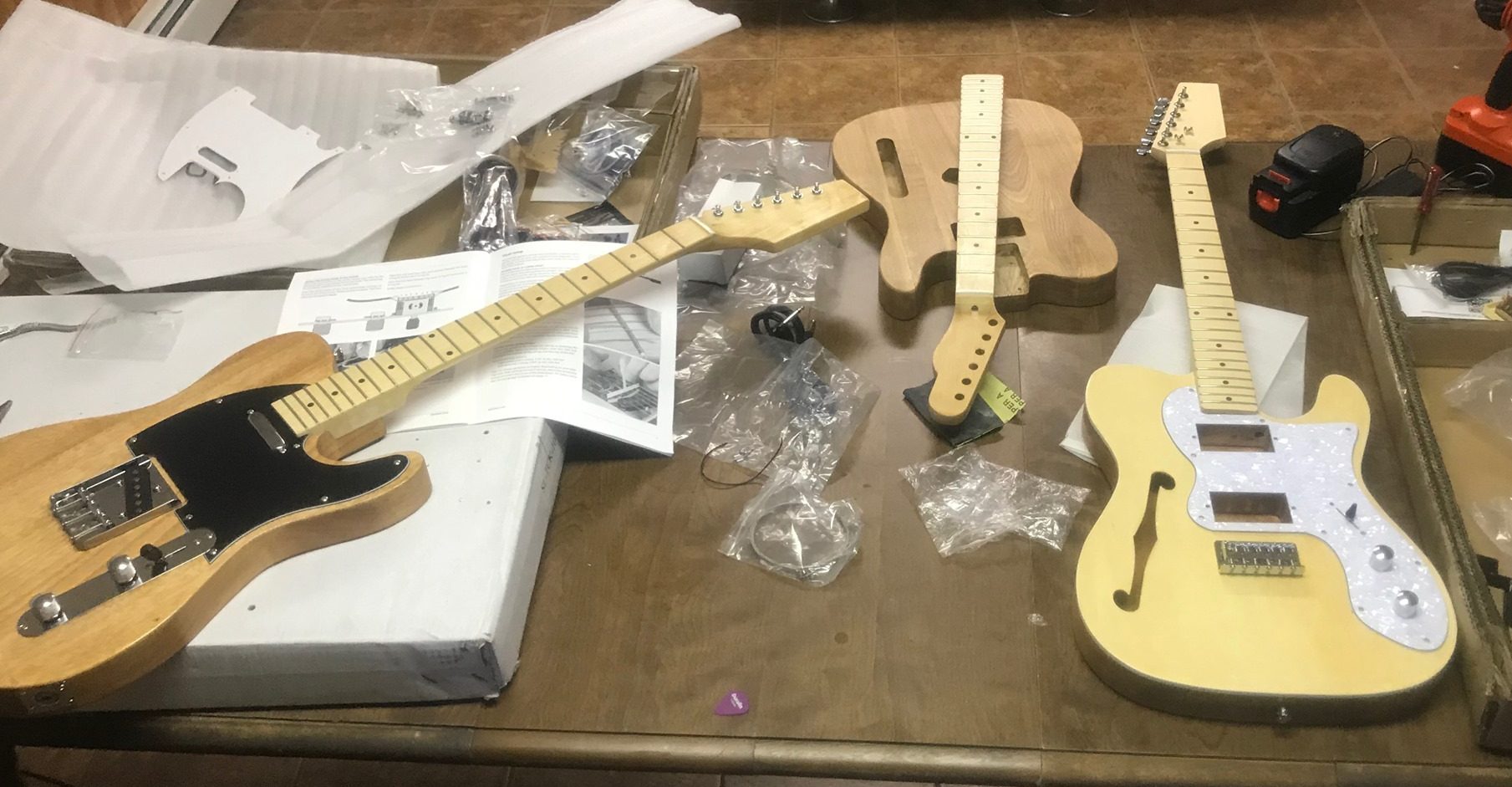
The guitar’s strung up, plugged in, and ready for review!
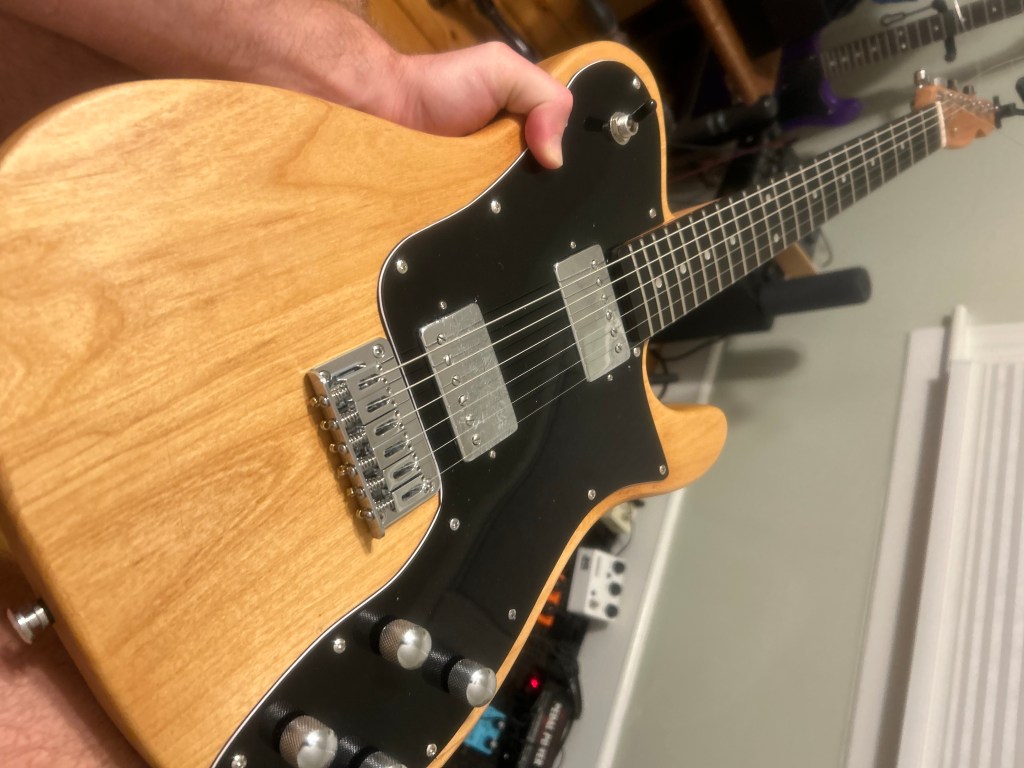
The time is finally here to showcase the finished product from our Guitar Kit World T-style Alder body build. I would highly recommend reading or refreshing your memory with the first article in this series by clicking here. The kit below is now a functional and assembled guitar!
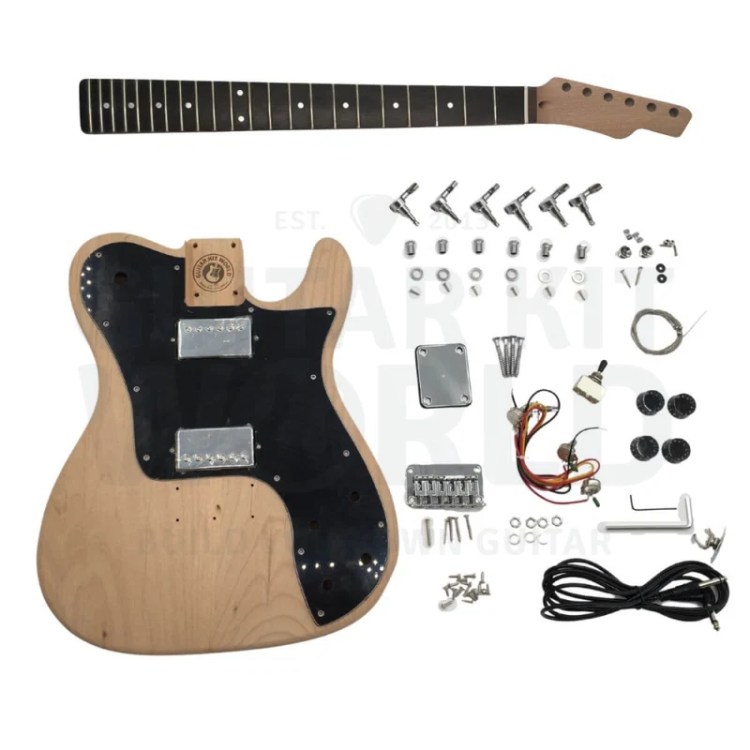
Let’s Start With The Good
There’s plenty to be excited about when it comes to this T-style DIY kit and my experience building it. The neck in particular is a highlight, as the fretboard is smooth, the frets came well dressed, and thicker feel is overall very comfortable. In many ways, this guitar has “good bones”, with a solid neck and nice construction of the body. There’s a lot of potential that has me quite excited for the eventual Part III where I turn this into a partscaster/mod project.
The wiring instructions on the Guitar Kit World website were very clear and did not make that process any more stressful. In fact, it should be a welcome resource for most beginners. Luckily it’s not my first time soldering but it was still a huge help to double check connections as the need arose.
Overall, assembling this kit was a very pleasant experience. It’s true that we hit a bump in the road with the tuning sheath but luckily I had a spare part. For folks who don’t have loads of guitar parts hanging around, it would be inexpensive to quickly replace, or you could wait for Guitar Kit World to send a replacement – though please note they did tell me it would take a relatively long time (weeks to months) for a replacement part to have arrived. I opted for a natural oil finish as I found the Alder wood body had a nice look to it and I eventually will be coating this thing in stickers anyways. Generally, smooth sailings!
In Fairness, There Are Some Areas To Criticize
As much as it sucks to have to be a touch negative, it’s my job to be honest about my experience. I want to caveat this by saying it is very possible I got a lemon and that 99% of all their DIY kits will not be exactly like this. So don’t let one experience color your view of this company. I had a great experience with my last kit from Guitar Kit World, so I know they’re capable of great work…but there were some issues here.
Admittedly, the wiring and electronics in my kit were just not up to par. I had several issues once I finished wiring it up that required re-soldering some of the pre-soldered connections that came stock in the kit. I also suspect I have a somewhat faulty input jack as the ground has randomly quit on me several times despite close inspection and many re-soldering touch ups. As you’ll hear in the video below, the pickups and wiring just aren’t producing a great sound. There’s some muddy clean tones and scratchy sound quality (only in the middle pickup position). For me, this isn’t really competent enough to take on stage with my band.
I actually compare it side by side with another guitar (another non-boutique guitar) in the demo video below to showcase the disparity in sound quality through the same rig. It’s worth noting that the tuning stability has also seemingly gotten worse in the week or so that I’ve had it together but with crazy fall weather here I’m willing to be a bit more forgiving about that.
Overall, This Kit Has Good Bones And Upside Potential
Having established the good and bad from this experience, I’m still overall pleased with where this kit CAN go in the future. Admittedly it could have been done faster but life and work tends to get in the way of fun hobbies like guitar assembly. While there were minor bumps in the road, there wasn’t anything that couldn’t be sorted out and I actually enjoyed having a few stumbling blocks. Part of the fun is trying to fix things and getting more comfortable with guitar tech skills. If you want a perfect guitar (and aren’t a master luthier) just buy one off the shelf. If you want to have fun and learn along the way, kits like this are a great choice.
While the pickups and electronic wiring are leaving a bit to be desired, I’m pleased with the weight, feel, fretboard, and overall fit of this T-style guitar. Upgrading it and modding it in the coming Part III should result in a really fun, customized T-style that I can add to my quiver. At the end of the day, as long as the kit results in a guitar that is playable you’re off to a good start. I’m happy to see this won’t take a major setup or adjustments to the body, and some upgraded electronics will likely have me happy as a clam. There are some quality control concerns to highlight throughout the process, like the defective tuner sheath and the wiring, but all of these can be easily addressed. When completing a kit build, you do have to take some ownership yourself when it comes to assembling a fully functional instrument. Time to start planning for the next phase of work, including some creative wiring, pickup upgrades, and new hardware!
Discover more from Guitars For Idiots
Subscribe to get the latest posts sent to your email.
