
I wish I played guitar pedals full time, but I actually research how contaminants move around the ocean instead.

This isn’t about guitar pedals, or guitar mods, or punk rock music. Weird, right? But while I genuinely love using this website to focus on gear, I feel like the world needs some science more than it needs another overdrive pedal demo right now. So I’m going to experiment mixing in articles that explain ocean science, environmental health, and my day job in the hopes that I can helps folks reconnect with the environment.
Today we’ll start off with a bit about my background and education. The picture above is from when I was working on my PhD at the University of Rhode Island as part of the STEEP Superfund Center. A Superfund Center is this awesome experience funded by the National Institute of Health where all these different scientists get together and work on projects together, despite having different backgrounds. Engineers, toxicologists, health scientists, oceanographers, and community engagement specialists all work together. It’s like having a metalhead, punk rocker, blues lawyer, and lo-fi looper all working together to design the perfect guitar.
Collectively we take our very different skills and work on projects and research topics that cross over all of our disciplines. Basically, we work on topics that are so important and interesting, they can’t be confined to just one aspect of our lives. Which brings us to PFAS.
Forever Chemicals
PFAS stands for per- and polyfluoroalkyl substances, but that’s a mouthfull so we just call them PFAS or “forever chemicals”. They’re known as forever chemicals because some of the most toxic and dangerous PFAS chemicals will stick around for a long time. Specifically, they will not degrade or just “go away” once they get in your body. They are persistent, and accumulate in humans and wildlife over time, in a process we scientists call bioaccumulation.
The difficult part is that there are so many PFAS, some scientists estimate there are well over 4,000 chemicals in the PFAS family. Yet we know about only a select few. Now, not all 4,000 are persistent, nor are we sure how and if all 4,000 are dangerous. The ones we have studied extensively have proven to be quite toxic and persistent though, which has many of us scientists not feeling too optimistic about the many others that exist.
I’ll do a in-depth dive of where PFAS come from, but they are man-made, not naturally occuring. They’re often used in consumer products to make things stain, water, or grease proof. Things like rain jackets, non-stick pans, microwave popcorn bags, takeout food containers, and coated guitar strings, just to name a few. They are also used in fire fighting foams, which are really good at putting out dangerous fires, but really bad for the environment, posing a tricky problem for us to solve.
Here’s a helpful video that can start to explain more!
Why Should You Care About PFAS?
One word: freedom. Freedom from having your water, food, and body polluted without your consent. It’s really that simple. Do you want a company or industry to have the right to expose you and your family to chemicals that have been proven to threaten your health, all without your consent? We know that PFAS are bad for you, and I’ll cover that in detail in a later post. But studies from people far smarter and more established than myself have shown a wide range of negative human health impacts from being exposed to a little bit of PFAS for a long time. We call that chronic exposure, which is different from acute exposure, which can be thought of as things that hurt you quickly. I.e., if you take a shot of rat poison, you will be instantly harmed. But PFAS harm you by having just a tiny, impossible to see amount being present in each glass of water you drink over time.
Here’s a great resource for looking at how PFAS can impact you and your family’s health. And if you want more info, feel free to reach out to me in the comments, over email, or just stay tuned for more of these articles that will be coming! You can also follow along with URI’s STEEP program to learn more.
In the coming weeks, I’ll be continuing to dive into PFAS, their toxic effects, where they come from, and how my research helps answer these questions! Hopefully you’ll all subscribe and follow along!
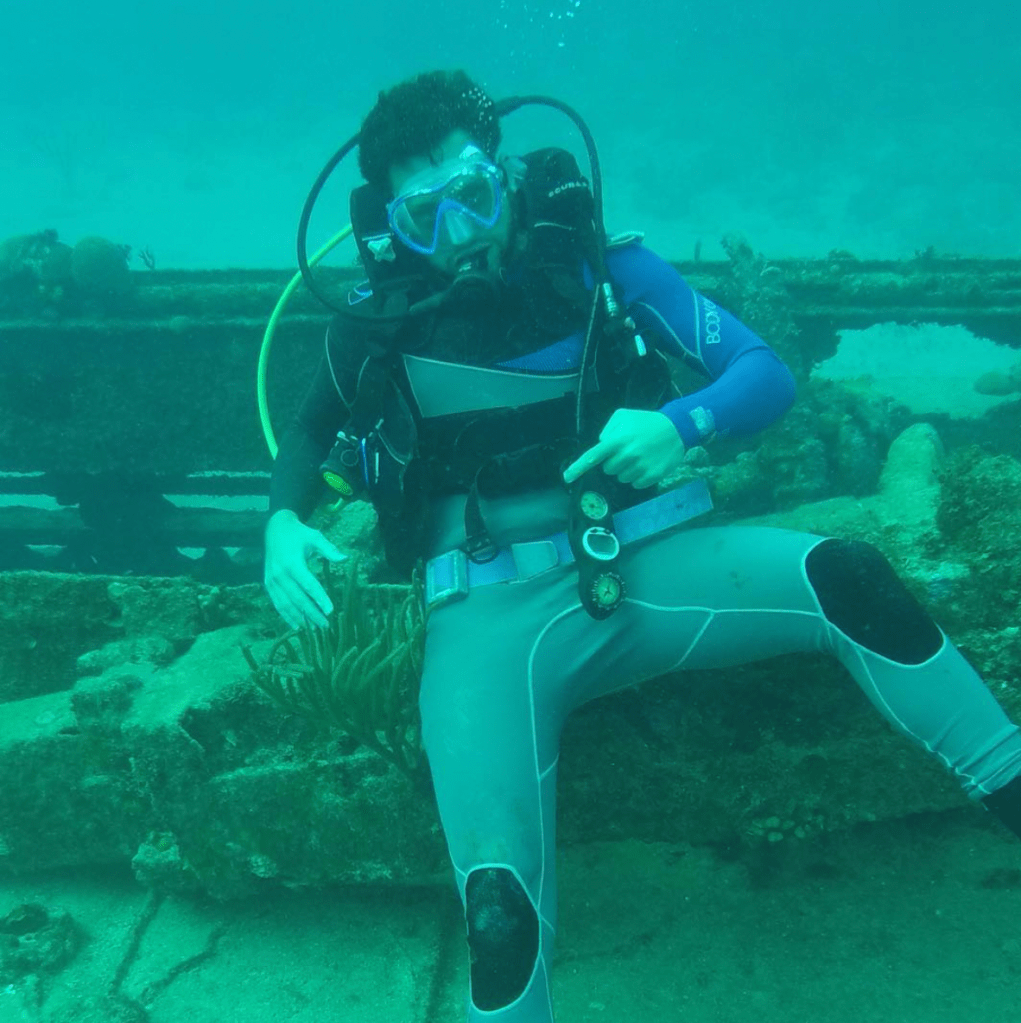
Guitars are great, but so is the ocean!
Discover more from Guitars For Idiots
Subscribe to get the latest posts sent to your email.

Hi Matt,
I’m an industry editor for a company and I’m writing an article about some “unusual” uses/applications of PFAS and I came across this article. Struck a chord with me (couldn’t resist the bad pun). Would love to interview you, given your interests and knowledge as both a musician and as a scientist. I can be reached at sandra.smith@3eco.com.
Thanks!
Sandy
LikeLiked by 1 person