Once you start actually copying the design and aesthetic of others, it is really in poor taste.
As pedal sales soared to new highs in the last five or so years we have seen a lot more clones take center stage. Clones are objectively a great thing, as they often serve as an entry way for young pedal builders to hone their skills and enter the market. Plus, if they are cloning circuits that you would be otherwise unable to get, be it from price or scarcity, it’s a win for us guitar players as well.
With this rise in cloning circuits, so too has a rise in cloning aesthetics and trade dress been observed. Admittedly this is on a much smaller scale, as I’d argue over 95% of circuit cloners are not actively infringing trade dress copyright or logo trademarks. Before we go any further though, let’s acknowledge the “rules” that pedal builders typically have to follow.
In the US, a specific circuit cannot be patented, thus, other people are allowed to make their own Klon or Tube Screamer circuit, assuming they can figure out how to do so. What can be patented though is the “trade dress”, which is the specific aesthetic or commercial look of a product, which may include logos, brand designs, or specific specifications that make a Klon look like a Klon. It’s also what makes a Friedman pedal look like a Friedman, or a Boss BD-2 look exactly like a BD-2. As such, it’s unlawful for a brand to make a direct aesthetic clone of a BD-2. This is to avoid market confusion, preventing the sale of counterfeit models of things like the Klon or King of Tone, while also giving some protections to original designers, as they still preserve market space.
While circuits can’t be patented, there’s a bit of an unwritten rule that you don’t try to copy certain circuits too soon after they are introduced. This is, as I said, unwritten, so there’s really no one to enforce it and there’s really a lot of debate if it’s even wrong in the first place. But online schematic resources like PedalPCB have been at the center of discussion in some circles about being too lenient on allowing cloning of newer circuits (i.e. not an older, established or discontinued product).
Let’s Get To DemonFX
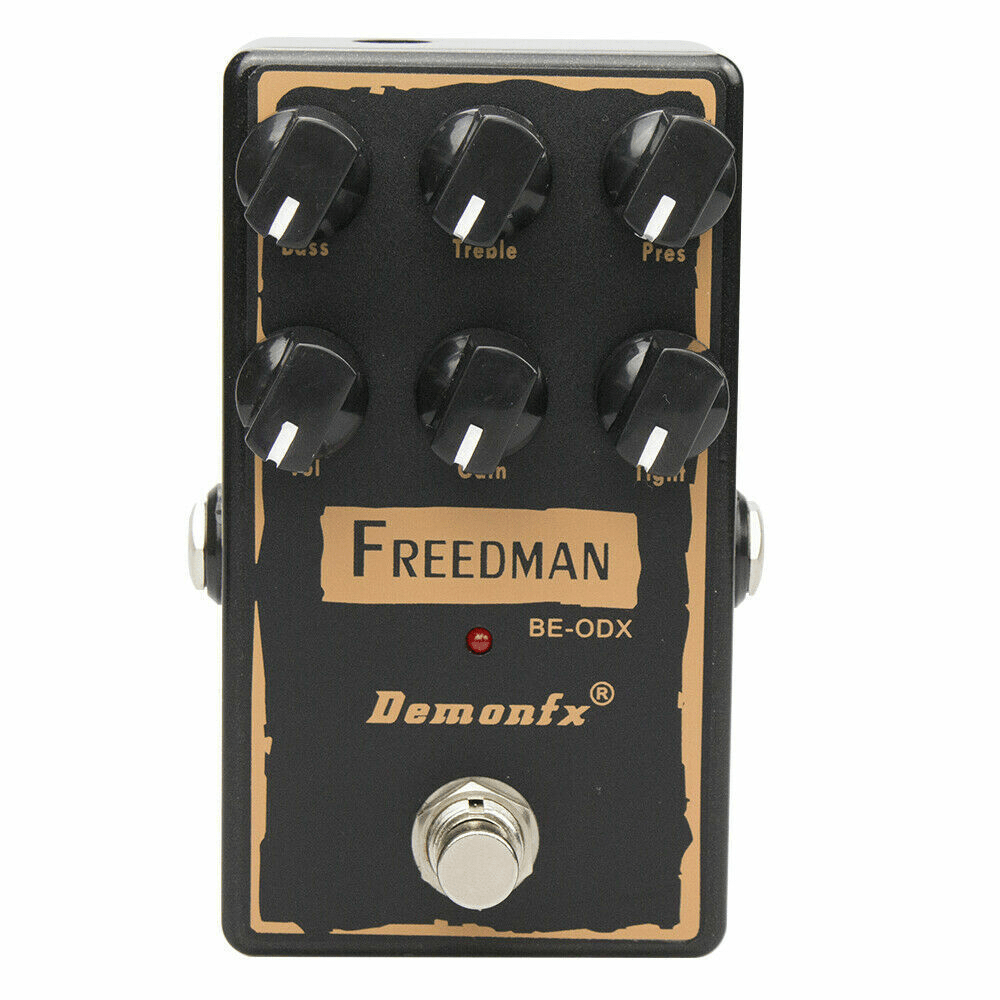
DemonFX really just goes too far over the trade dress line, and I think it’s something that too few people put much thought into. The key thing here is that they clone the trade dress of pedals that are STILL in production. The cover image shows a clear Friedman pedal clone, but they have King of Tones, a Keeley Cavern, JHS AT+, and many more popular and contemporary circuits. That’s where the line is for me.
Come on, that’s just ridiculous. And somehow, it’s not illegal enough to take down? Or perhaps it’s just not worth the hassle for Keeley. Yet people online sing the praises of these cheap clones. There are so many amazing budget brands like Caline, Joyo, and Nux that play within the rules and make killer pedals that can do these things for you. If you pride yourself on using budget pedals, why would you want something that looks boutique anyway? You secretly just want the Keeley Caverns, but can’t admit it? I totally understand and can relate to not being able to afford one, but then dip into the other affordable pedal brands with great products and better practices.
Am I Giving Warm Audio A Free Pass?
One lingering question here is that how can I critique DemonFX but not attack Warm Audio? For those who don’t know, Warm Audio has been in some online hot water due to their recent string of clone releases. Their whole marketing thing is that they make a Klon and it looks exactly like a Klon, ditto for the OCD, Mutron Phaser, and many more classic formulas. Okay, I do think that Warm Audio is also perilously close to the edge of acceptable, but they seem to ride that fine line by focusing on brand names that are at least temporarily defunct. Rumors have also circulated online that they have some sort of licensing agreement with certain brands to make pedals that look similar to their schtick. I wonder if that’s the case for their OCD clone, the ODD, as technically Mike Fuller is still around and new pedals are made by Jackson Audio with his blessing under the Fulltone name. Sidenote, boy if that’s not a pair of *interesting* folks in Fuller and Jackson…
But Warm Audio’s clones of the Klon, Zendrive, and Jet Phaser may fit the bill a little better. You cannot currently get brand new production versions of those pedals from the brand names, so I can see how they can barely skirt the trade dress rules. Though that doesn’t mean I’m necessarily a fan of the practice, I think it’s a step below releasing an exact clone of a King of Tone or Caverns pedal.
But the real takeaway here is that the pedal world is a rich landscape of grey area. Different folks and their legal teams can get away with all different types of things. Just because something is legal, doesn’t make it ethical. However, it is up to you to decide what and when ethical considerations are of concern to you. In the grand scheme of the world’s problems, DemonFX or Warm Audio are so miniscule. So I don’t blame many for shrugging off the practices. Other folks who are very deep into the pedal community and world may feel more strongly. My opinion is that DemonFX is bad business, while Warm Audio is questionable, but probably fine. I don’t lose too much sleep on someone stealing sales from Fulltone, so I may even take my hat off to Warm Audio on that one. But to each their own! Most importantly, what do YOU think?
Discover more from Guitars For Idiots
Subscribe to get the latest posts sent to your email.

One thought on “I Love Cheap Pedals, But DemonFX Is Bad Business”